Written by Human & AI
Table of contents
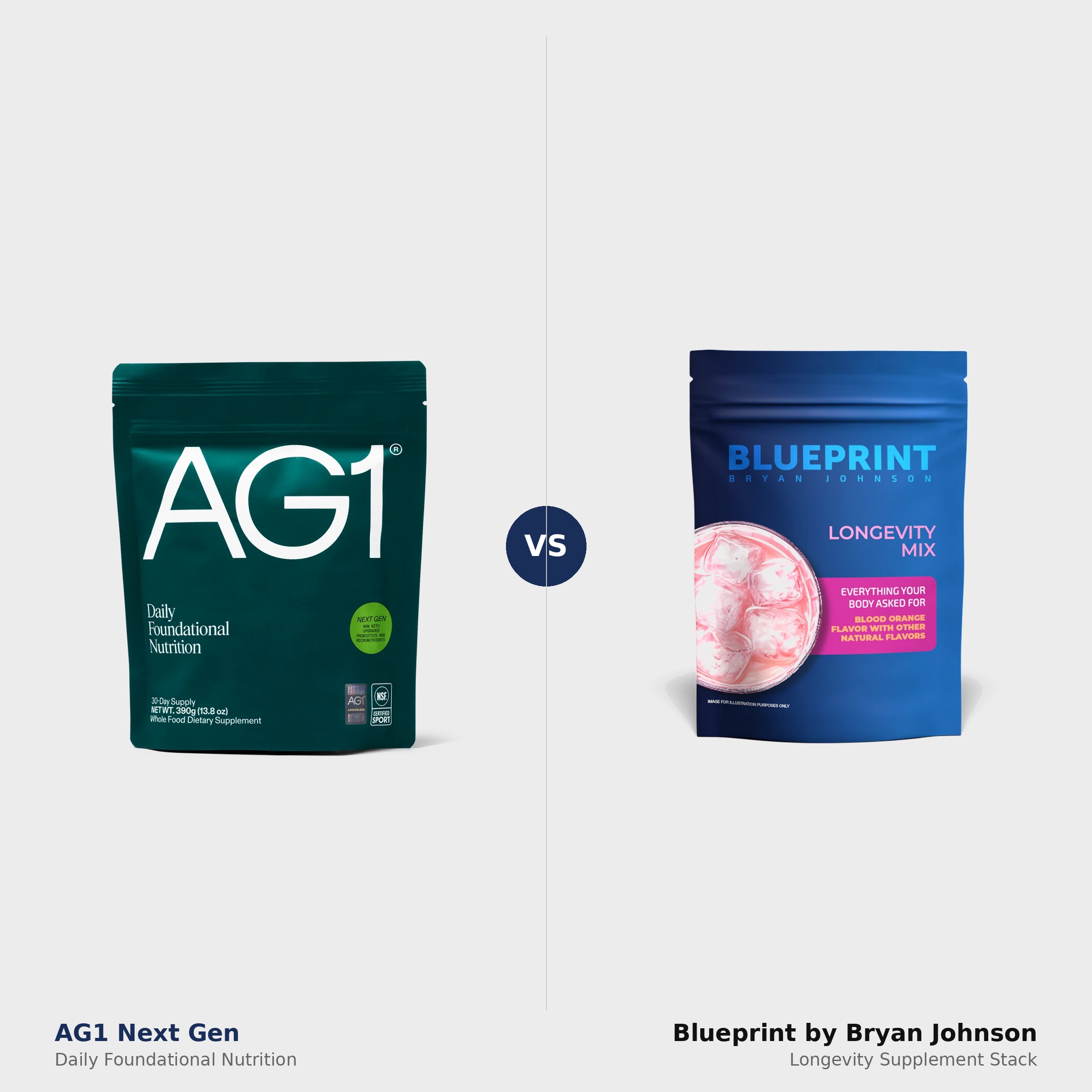
AG1 and Blueprint are not the same type of product, and comparing them head-to-head requires some context. For anyone interested in AG1 vs Blueprint by Bryan Johnson, it’s important to note the unique focus of each. AG1 is a daily greens powder designed to support general health and fill nutritional gaps. Blueprint is a full longevity supplement stack built around Bryan Johnson’s extreme anti-aging protocol.
Most health-conscious people considering both are choosing between a simple daily supplement and a more intensive biohacking approach, even though they serve different goals. AG1 costs $79 per month and targets everyday nutrition, energy, and gut health. Blueprint costs around $361 per month and is built around biological age reduction and cellular optimisation.
This comparison explains what each product actually does, who it is made for, and which one makes sense for your health goals and budget. Both products have genuine strengths, but they are designed for different users with different priorities. For a broader look at how AG1 compares across the greens powder market, see our full AG1 review.
Key takeaways
- AG1 is a daily greens powder for general health at $79 per month. Blueprint is a complete longevity stack at $361 per month focused on anti-aging and cellular health.
- Blueprint offers full ingredient transparency with published doses and third-party testing. AG1 uses proprietary blends that do not disclose individual ingredient amounts.
- AG1 works best for most people seeking convenient daily nutrition. Blueprint suits serious biohackers who are willing to invest significantly in longevity optimisation.
AG1 vs Blueprint: quick comparison
| Category | AG1 | Blueprint Stack |
| Monthly cost | $79 (subscription) | ~$361 (full stack) |
| Annual cost | ~$948 | ~$4,332 |
| Format | Single daily powder | 7 separate products |
| Primary goal | Daily nutritional optimisation | Longevity and biological age reduction |
| Ingredients | 83 in proprietary blends | 60+ with fully published doses |
| Certifications | NSF Certified for Sport | Third-party tested, results published |
| Clinical backing | Ingredient-level research | Based on Bryan Johnson’s personal protocol |
| Transparency | Proprietary blends | Full label disclosure, no blends |
| Target user | General health-conscious adults | Serious biohackers, longevity enthusiasts |
AG1: daily nutrition simplified

What is in the formula
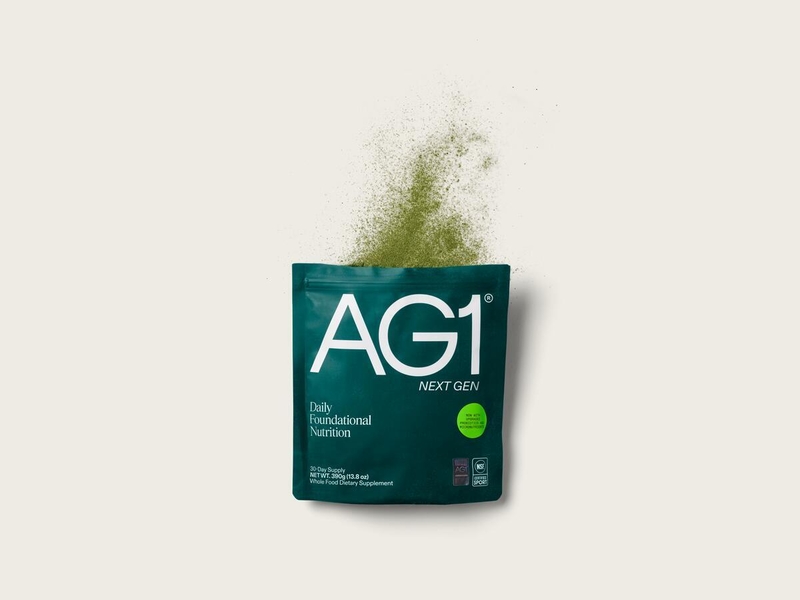
AG1 delivers 83 ingredients in a single daily scoop for $79 per month. The formula covers vitamins, minerals, probiotics, prebiotics, digestive enzymes, adaptogens, and antioxidants. Key nutrients include vitamin C, vitamin E, zinc, and B vitamins, alongside greens such as spirulina and chlorella. Adaptogenic herbs including ashwagandha and rhodiola are included, as are mushroom extracts like reishi and shiitake.
AG1 uses proprietary blends, which means the company does not disclose the exact amount of each individual ingredient. Users know the total amount of each blend but not the quantity of any single component within it. The probiotic count is disclosed at 7.2 billion CFU, and some vitamins list specific amounts. Most herbal extracts and superfood ingredients remain unquantified on the label.
NSF certification and probiotics
AG1 holds NSF Certified for Sport certification, which tests for over 270 banned substances and verifies that the product contains what the label claims. This matters primarily for competitive athletes who need to avoid accidentally consuming prohibited compounds, but it also signals a meaningful level of quality control for general consumers.
The formula provides 7.2 billion CFU of probiotics across four bacterial strains: Lactobacillus acidophilus, Bifidobacterium bifidum, Bifidobacterium lactis, and Lactobacillus plantarum. These strains support digestive health and gut microbiome balance. Prebiotics and digestive enzymes are included to support nutrient absorption and digestive function.
Cost and subscription
AG1 costs $79 per month on subscription for 30 single-serving pouches. First-time subscribers receive a welcome kit with a storage container, travel packs, and a vitamin D3 dropper. Purchasing without a subscription costs $99. The subscription can be paused, skipped, or canceled at any time.
Blueprint: the longevity stack

Origins and philosophy
Blueprint emerged from Bryan Johnson's personal $2 million per year anti-aging experiment, Project Blueprint, and represents one of the most aggressive supplement protocols available to consumers. Johnson launched the product line after becoming frustrated with the supplement industry's lack of transparency. The company was built around what Johnson calls radical transparency: every ingredient dose is published, every batch is third-party tested, and the company openly criticises fairy dust dosing, where ingredients are added to labels in amounts too small to have any measurable effect.
The Blueprint product line makes a scaled-down version of Johnson's personal protocol accessible to the public. Johnson shares his biomarker data, testing outcomes, and protocol adjustments openly as part of the brand's commitment to accountability.
What is in the stack
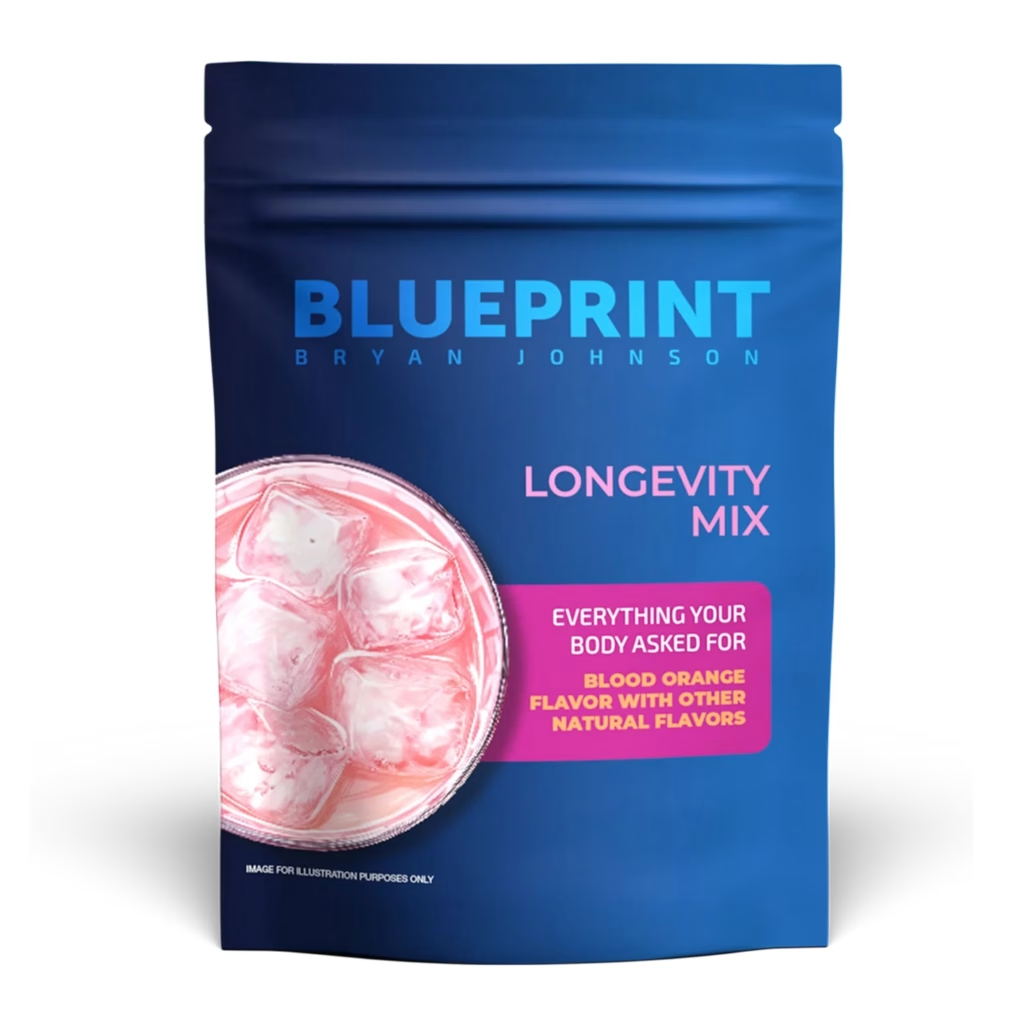
The complete Blueprint Stack costs approximately $361 per month and includes seven core products. The Longevity Mix contains NMN, CoQ10 and ubiquinol, fisetin, luteolin, lithium orotate, glutathione, and 60 other compounds targeting NAD+ levels and cellular repair. Essential Capsules provide 24 foundational nutrients with published doses and third-party testing. Advanced Antioxidants, Metabolic Protein Powder, Creatine, Collagen Peptides, and Extra Virgin Olive Oil round out the daily protocol.
Each product targets specific longevity pathways rather than general wellness. The stack focuses on biological age reduction, mitochondrial function, and cellular health optimisation. Users take multiple servings throughout the day across capsules, powders, collagen, and olive oil. The protocol demands commitment and assumes users understand the reasoning behind each compound.
Transparency and testing
Blueprint publishes exact dosages for every ingredient across all products. No proprietary blends hide ingredient amounts, and every batch undergoes third-party testing for purity and potency, with results published on the website. This approach lets users verify claims and compare ingredients against published research directly. The Essential Capsules provide 24 nutrients at documented amounts that consumers can cross-reference against clinical thresholds.
Purpose and user intent: everyday health vs advanced longevity
AG1 for general wellness
AG1 serves as a foundational supplement for people who want comprehensive nutrition without having to think deeply about individual compounds. The product combines 83 ingredients into a single daily scoop, replacing what would otherwise require multiple bottles of vitamins, greens, and probiotics.
The primary goals are energy support, immune function, gut health, and filling micronutrient gaps. Users typically take AG1 in the morning as part of a routine. The appeal is simplicity: one drink covers multiple bases without requiring research into individual compounds, dose tracking, or managing several bottles. For a full breakdown of what AG1 delivers nutritionally, see our best greens powders roundup.
Blueprint for biological age optimisation
Blueprint's purpose is specific and measurable. Bryan Johnson built this stack from his personal anti-aging protocol, where he tracks biomarkers obsessively and adjusts based on data. The Blueprint Stack includes NMN for NAD+ production, CoQ10 for mitochondrial function, fisetin for senolytic effects, and glutathione for cellular health. These are targeted interventions with specific mechanisms tied to aging research, not convenience ingredients.
Users take multiple servings throughout the day and the protocol demands real commitment. Blueprint publishes every ingredient dose and third-party test result and expects users to verify the science themselves. This is not a product for someone who wants a simple morning routine.
Realistic outcomes from each approach
AG1 users typically expect to feel better day to day: more consistent energy, improved digestion, fewer gaps in micronutrient intake. The product addresses immediate wellness concerns and prevents deficiencies in active people with imperfect diets.
Blueprint users track bloodwork, inflammation markers, and biological age scores. The goal is not feeling good this week. It is measurably slower aging over years. Users typically combine the stack with strict dietary protocols, exercise programmes, and regular lab testing. Most people need what AG1 offers. Blueprint serves the subset willing to invest $361 monthly and treat supplementation as a serious biohacking project.
Price and accessibility
What Blueprint costs and why
The Blueprint Stack runs approximately $361 per month for the complete system. Over a full year, that adds up to $4,332. This reflects premium ingredients like NMN, ubiquinol, and glutathione at clinical doses rather than trace amounts. Blueprint positions itself as a comprehensive longevity system, not a single supplement, and the price reflects that scope.
For serious biohackers already tracking biomarkers and following structured health protocols, the pricing aligns with the product's positioning. For most people, spending over $4,000 annually on supplements is neither realistic nor sustainable. Blueprint's price point limits its audience to higher-income users who specifically prioritise longevity spending.
AG1's value for most consumers
AG1 costs $79 per month for a daily greens powder that replaces multiple supplements. One scoop covers 83 ingredients including 7.2 billion CFU probiotics, adaptogens, antioxidants, and digestive enzymes. Over a year that is $948, compared to $4,332 for Blueprint. That $3,384 annual difference is the clearest way to frame this comparison for most readers.
AG1 does not require purchasing multiple products or managing a complex supplement schedule. The single-powder format makes it accessible for people who want broad nutritional coverage without the commitment or complexity of a full biohacking stack.
AG1 costs $79 per month and covers 83 ingredients in one daily scoop. Subscribe and save with the 60-day money-back guarantee. Shop AG1 here
Ingredient transparency: where Blueprint pulls ahead
Blueprint's approach
Blueprint lists every ingredient with exact dosages on the website and product labels. The Longevity Mix contains 60 documented compounds with specific amounts stated for each. Every product undergoes third-party testing with results published online. The Essential Capsules provide 24 nutrients at documented amounts that consumers can verify against clinical research. Blueprint does not use filler ingredients or proprietary blends. Each ingredient serves a specific function in the longevity protocol and the company explains the reasoning behind every inclusion.
AG1's proprietary blend model
AG1 divides its 83 ingredients into four proprietary blends: an alkaline superfood complex, a nutrient-dense extracts blend, a digestive enzyme and mushroom complex, and a dairy-free probiotics blend. The label shows total blend weights but not individual ingredient amounts. Consumers know AG1 contains ashwagandha, spirulina, and rhodiola but not how much of each. The probiotic count is disclosed at 7.2 billion CFU, and specific vitamins list exact amounts, but most herbal extracts and superfood ingredients remain unquantified.
AG1 holds NSF Sport certification, which verifies the product is free from banned substances and manufactured to quality standards. This certification provides genuine assurance but does not replace ingredient-level transparency.
What this means in practice
Blueprint's transparency lets consumers cross-reference doses against clinical studies. Someone can verify whether the CoQ10 amount matches therapeutic levels or whether the fisetin dose aligns with senolytic research. AG1's proprietary blends prevent this type of verification. Consumers must trust the formulation without knowing whether ingredients are present at effective doses or minimal amounts.
For biohackers tracking specific compounds and optimising protocols, Blueprint's disclosure is essential. For general health consumers who want a vetted daily supplement without analysing individual ingredients, AG1's model is broadly acceptable given its NSF certification and strong track record.
Who should choose each product?
AG1 is the right choice if you...
AG1 makes sense for busy professionals, athletes, and health-conscious people who want to simplify their supplement routine. It works well for anyone struggling to eat enough vegetables or looking to support gut health consistently. The 7.2 billion CFU probiotic blend addresses digestive concerns that most people experience. If your supplement budget is under $100 per month, AG1 delivers comprehensive nutrition without requiring a significant financial commitment or complex daily protocol.
AG1 users typically want results without deep research. They trust NSF Sport certification and prefer not to manage multiple bottles or track individual nutrient doses throughout the day. For these users, one drink in the morning that covers the bases is exactly what they need.
Blueprint is worth considering if you...
Blueprint targets people who treat longevity optimisation as a serious investment. These users typically spend several hundred dollars monthly on health, track biomarkers regularly, and understand why they are taking compounds like NMN, fisetin, and glutathione. The stack appeals to biohackers familiar with NAD+ boosters, senolytic compounds, and cellular health research.
Blueprint users often work with longevity doctors or order regular blood panels. They view the $361 monthly cost as acceptable for potential biological age reduction, not basic nutritional maintenance. If you are not already tracking biomarkers and following a structured health protocol, Blueprint is not the right starting point. It is an advanced layer that assumes solid nutritional foundations are already in place.
Final verdict
For the vast majority of people, AG1 is the right choice. It is affordable, convenient, NSF certified, and covers a broad range of daily nutritional needs in a single morning drink. The 7.2 billion CFU probiotic count is one of the highest available in any greens powder, and the 83-ingredient formula has been refined over more than a decade. At $79 per month, it is accessible to most health-conscious adults and does not require any significant lifestyle adjustment to use consistently.
Blueprint is a genuinely impressive product built on a philosophy of radical transparency and serious science. The full ingredient disclosure, published third-party testing, and longevity-focused compounds are real differentiators that AG1 cannot match. But Blueprint is not for most people. At $361 per month, it requires both the budget and the commitment to use it properly, and it delivers the most value to users who are already tracking biomarkers and treating supplementation as a data-driven experiment.
If you are currently taking AG1 or considering it as a foundational daily supplement, Blueprint is not a replacement. It is an entirely different category of product for an entirely different type of user. Start with AG1 and cover your nutritional bases first. Explore Blueprint when you are ready to go deeper.
Frequently asked questions
What are the main differences in purpose between AG1 and Blueprint?
AG1 functions as a foundational supplement that replaces a multivitamin and adds greens, probiotics, and adaptogens. It targets everyday health needs like energy, digestion, and immune support for a general adult population. Blueprint is a longevity stack designed for biological age reduction and cellular health optimisation. The target user is someone actively engaged in biohacking, tracking biomarkers, and investing significant resources into anti-aging protocols. These products address different stages of health optimisation. AG1 covers nutritional gaps for typical adults. Blueprint addresses advanced longevity goals for people who have already covered their nutritional basics.
How do the monthly costs compare, and what does that mean for long-term affordability?
AG1 costs $79 per month for one daily serving. Blueprint's recommended stack costs approximately $361 per month. Over a year, AG1 costs $948 while Blueprint costs $4,332. That is a $3,384 annual difference. For most people, spending over $4,000 annually on supplements is not realistic or sustainable. Blueprint's price point limits its accessibility to higher-income users who specifically prioritise longevity spending. AG1's pricing makes it accessible for long-term daily use across a much broader population.
Which is more suitable as an everyday nutritional supplement for most healthy adults?
AG1 is designed specifically as nutritional insurance. Its 83 ingredients cover vitamins, minerals, probiotics, adaptogens, and greens in one daily serving. The product fills common dietary gaps without requiring users to track biomarkers or maintain complex protocols. It works for busy adults who want comprehensive nutritional support without extensive planning. Blueprint is not nutritional insurance. It is a specialised stack for longevity optimisation that assumes users already have solid baseline nutrition in place. Most healthy adults need foundational support, not advanced anti-aging compounds.
How should buyers weigh proprietary blends against fully disclosed ingredient dosages?
Blueprint publishes every ingredient dose and conducts third-party testing on all products. This transparency allows users to verify effective dosing and check for contaminants. AG1 uses proprietary blends, which means individual ingredient amounts remain undisclosed. Users know the total blend weight but not specific doses of each component. Transparency matters more when users are targeting specific health outcomes or tracking biomarkers. For general wellness, proprietary blends are less problematic if the total formula is effective and tested. AG1 holds NSF Sport certification, which verifies product safety and label accuracy even without individual dose disclosure. Buyers focused on longevity and biomarker optimisation have stronger reasons to prioritise full transparency.
What realistic outcomes can you expect from each approach?
AG1 supports realistic daily health goals: improved digestion through 7.2 billion CFU probiotics, better energy from B vitamins and adaptogens, and immune function from antioxidants and mushrooms. Users can expect better nutritional consistency and gut health support. These outcomes show up in how people feel day to day rather than in lab results. Blueprint targets measurable longevity outcomes: NAD+ optimisation through NMN, cellular protection from glutathione and ubiquinol, and inflammation reduction from specialised compounds. Blueprint users typically track blood biomarkers, biological age tests, and other quantifiable health metrics. AG1 improves how most people feel and function daily. Blueprint aims to extend healthspan through cellular-level intervention.
Who is Blueprint realistically for, and what does it require to use properly?
Blueprint makes sense for people already investing heavily in longevity and biohacking. This includes individuals who regularly test biomarkers, follow strict health protocols, and have disposable income for health optimisation. The monthly cost of $361 requires a budget that genuinely prioritises longevity spending. Users also need commitment to daily adherence across multiple products and willingness to track results through regular lab testing. Blueprint works best for people who have already optimised diet, exercise, sleep, and stress management. It is an advanced layer, not a starting point. AG1 fits nearly everyone else: busy professionals, athletes, parents, and health-conscious adults who want convenient baseline nutrition support without complex protocols.